Clean Glass Shower Doors and Remove Hard Water Stains: Effective Tips and Methods

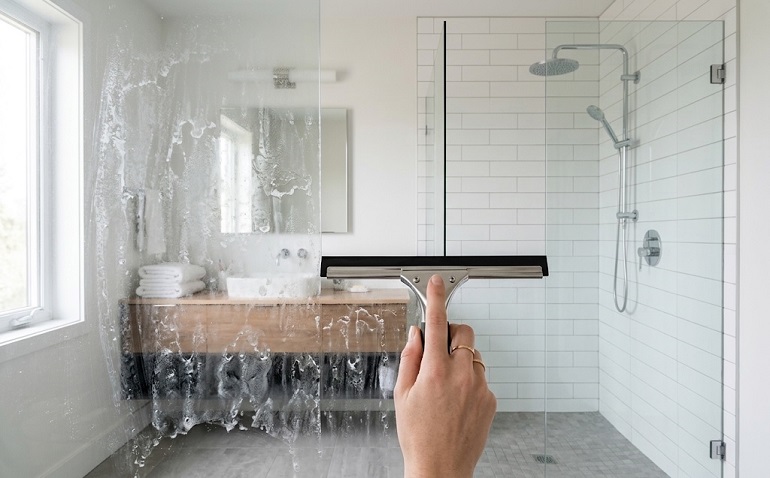
Clean glass shower doors and remove hard water stains effectively by understanding the chemical buildup that compromises bathroom glass. Sparkling glass shower enclosures instantly open up bathroom layouts and showcase internal tile work, but daily exposure to mineral-heavy tap water and soap residue can turn clear glass cloudy within weeks.
Restoring clarity to glass shower panels requires a systematic cleaning approach that targets both organic soap scum and mineral deposits. By combining the right cleaning agents, non-abrasive scrubbing tools, protective treatments, and simple daily maintenance habits, you can keep your glass doors crystal clear while preserving the glass surface for years to come.
The Science Behind Hard Water Stains and Soap Scum
Understanding what causes cloudy glass helps in selecting the right cleaning strategy to dissolve deposits without scratching the panel.
Mineral Scale and Limescale
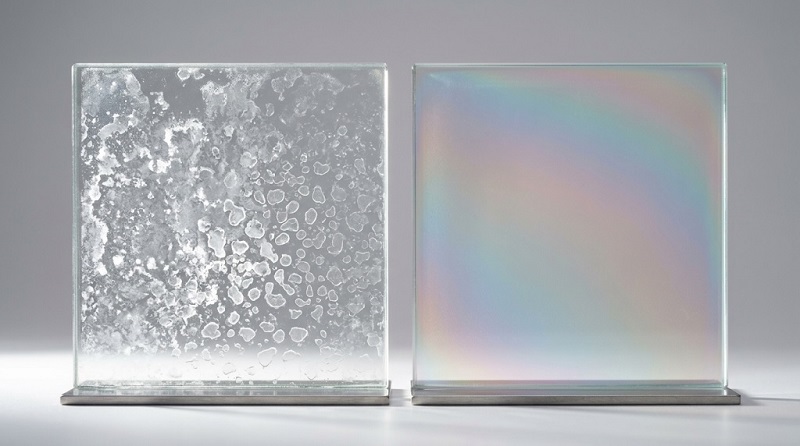
Hard water contains high concentrations of dissolved minerals, primarily calcium, magnesium, silica, and iron. When water droplets sit on glass shower doors and evaporate, these dissolved minerals remain behind. Over time, recurring evaporation builds up thick, chalky mineral layers known as limescale. If left untreated, alkaline minerals react chemically with the silica in the glass, leading to etching—a permanent physical pitting of the glass matrix that cannot be wiped away with standard cleaners.
Soap Scum Bonding
Soap scum forms when animal fats or vegetable oils present in traditional bar soaps react with calcium and magnesium ions in hard water. This reaction creates an insoluble, sticky white or grey film that adheres tightly to smooth glass surfaces. Soap scum acts like a binder, trapping dust, skin oils, and mineral dust in a dense layer that resists ordinary water rinsing.
Silica Stains and Corrosion
While calcium and magnesium deposits dissolve easily in mild acids, silica buildup poses a harder challenge. Silica forms hard, glass-like bonds with the shower door surface. Identifying whether your glass suffers from surface mineral buildup or permanent glass corrosion is crucial. If the glass feels rough to the touch, the buildup sits on top of the surface and can be removed. If the glass feels smooth but still looks hazy or rainbow-tinted under light, etching has occurred.
Safe and Natural Vinegar and Acid Cleaning Solutions
Acidic cleaning solutions break down alkaline mineral bonds without damaging tempered shower glass or releasing harsh toxic fumes into enclosed bathroom spaces.
White Vinegar and Dish Soap Spray
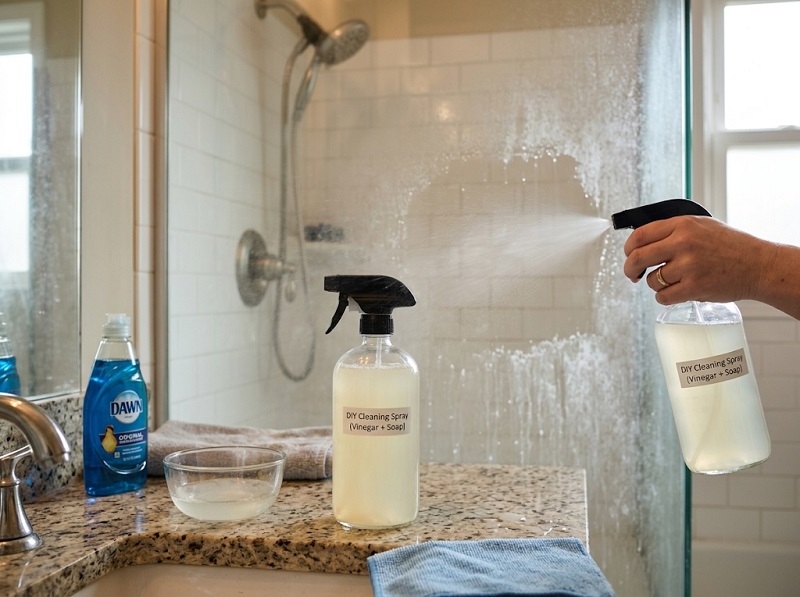
Distilled white vinegar contains roughly five percent acetic acid, making it an ideal, affordable mineral dissolver. Mixing equal parts white vinegar and liquid dish soap creates a high-performing homemade glass cleaner:
- Warm the white vinegar in a microwave for thirty seconds to increase its reaction rate.
- Mix the warm vinegar with an equal amount of grease-cutting liquid dish soap in a spray bottle.
- Spray the solution generously over dry glass shower doors, covering all hazy areas.
- Allow the mixture to dwell on the glass surface for fifteen to thirty minutes so the acid breaks down calcium bonds while the dish soap dissolves oil layers.
- Scrub lightly with a soft microfiber sponge and rinse thoroughly with warm water.
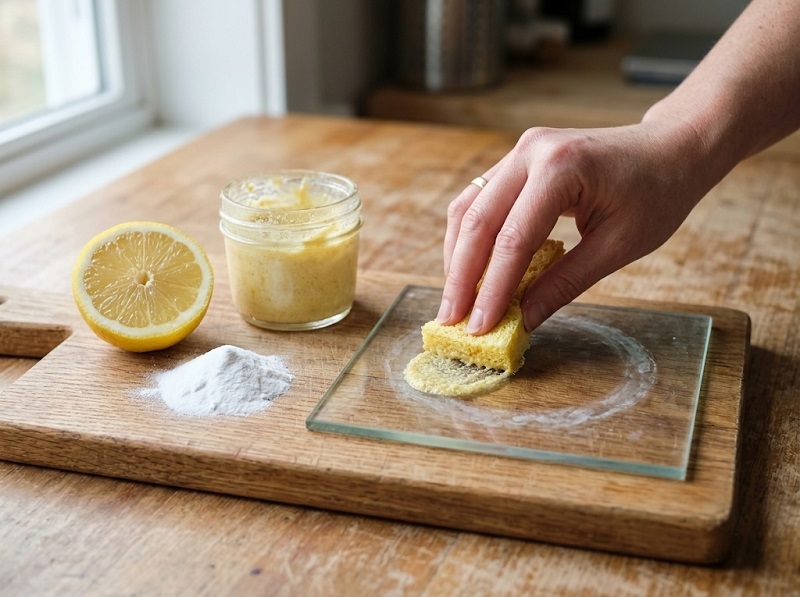
Lemon Juice and Baking Soda Paste
For stubborn mineral rings and heavy lower-panel scale, a mild abrasive paste provides extra cleaning power:
- Mix fresh lemon juice with baking soda to form a thick paste with the consistency of toothpaste.
- Apply the paste directly onto mineral-stained zones using a soft sponge.
- Lightly work the paste over the glass in gentle circular motions. The citric acid in lemon juice works alongside the mild mechanical action of baking soda to lift scale without scratching the glass pane.
- Rinse clean with fresh water and dry immediately with a microfiber cloth.
Deep Cleaning Heavy Mineral Deposits with Commercial Cleaners
When natural household items fall short on multi-year mineral buildup, specialized commercial cleaners and mechanical techniques offer deeper restoration.
Acidic Commercial Sprays and Gel Formulas
Commercial hard water stain removers often utilize phosphoric acid, sulfamic acid, or oxalic acid. Gel-based formulas perform exceptionally well on vertical shower doors because they cling to the glass rather than running off into the drain instantly. When applying chemical cleaners, always open bathroom windows, turn on exhaust fans, and wear rubber gloves to protect your skin and lungs.
Using Plastic Scrapes and Steel Wool Safely
Removing hardened mineral crusts sometimes requires physical lifting:
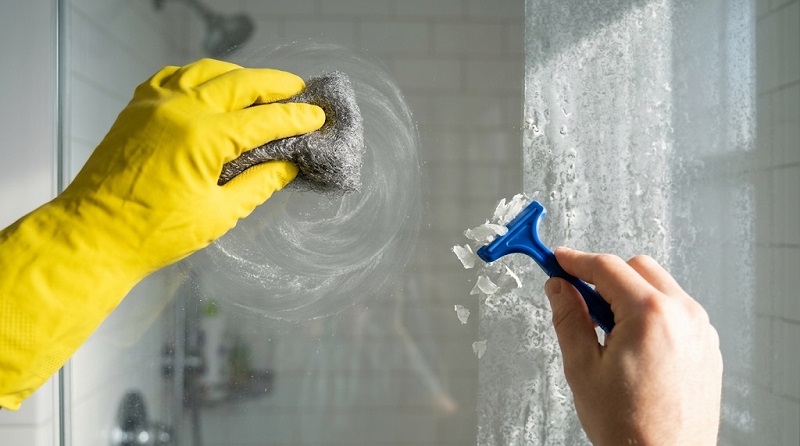
- Grade 0000 Ultra-Fine Steel Wool: Only use grade 0000 steel wool on dry shower glass. Ultra-fine steel wool polishes off stubborn mineral scale without scratching tempered glass. Never use coarse steel wool or scouring pads containing silicon carbide, as they cause micro-scratches.
- Plastic Razor Blades: Holding a plastic razor blade at a thirty-degree angle allows you to shave thick mineral deposits off the glass surface safely without gouging glass or damaging surrounding aluminum frame finishes.
Step-by-Step Restoration Process for Clouded Glass
Follow this sequential process to take clouded, heavily stained shower doors back to factory clarity.
Step 1: Dry Pre-Treatment Inspection
Examine the dry shower door under direct light to identify problem areas. Concentrating your initial efforts on heavy mineral lines around hinges, handles, and lower door tracks saves time.
Step 2: Applying the Acid Solution
Coat the entire glass panel with your chosen acidic gel or vinegar mixture. Work from top to bottom to ensure total coverage. Re-spray the glass every ten minutes if the room is warm, keeping the surface wet while the acid works.
Step 3: Agitation and Polishing
Using a non-abrasive microfiber sponge or grade 0000 steel wool, work over the glass in small overlapping circles. Focus extra attention on water droplet outlines and areas near bottom door seals where water pools after showers.
Step 4: Complete Rinsing
Rinse the door thoroughly using a handheld showerhead or a pitcher filled with fresh water. Ensure no acid or soap residue stays behind in track grooves or along rubber sweep seals.
Step 5: Drying and Inspection
Use a clean rubber squeegee to strip water off the panel, followed by a dry microfiber towel along the edges. Check the clarity against a dark background to verify that all mineral haze has been cleared.
Protective Coatings to Prevent Future Water Stains
Once your shower glass is completely clean, applying a hydrophobic protective barrier prevents minerals from bonding to the surface again.
Hydrophobic Glass Sealants
Hydrophobic glass treatments create an invisible, water-repellent layer across the glass panel. When water strikes a treated glass surface, it forms tight round beads that slide off instantly, taking mineral particles and soap residue down the drain with them. Reapplying a liquid hydrophobic glass coating every three to six months keeps maintenance fast and simple.
Ceramic Coatings
Professional-grade ceramic coatings utilize nano-silica technology to fill microscopic pores in the glass surface. Once cured, ceramic coatings form a durable shield that lasts up to two years. Treated glass resists mineral etching, soap scum adhesion, and chemical discoloration, reducing daily cleaning effort significantly.
Essential Daily Habits for Spotless Shower Glass
Preventing hard water stains requires far less time and labor than removing heavy mineral buildup later. Adopting quick post-shower habits maintains glass clarity indefinitely.
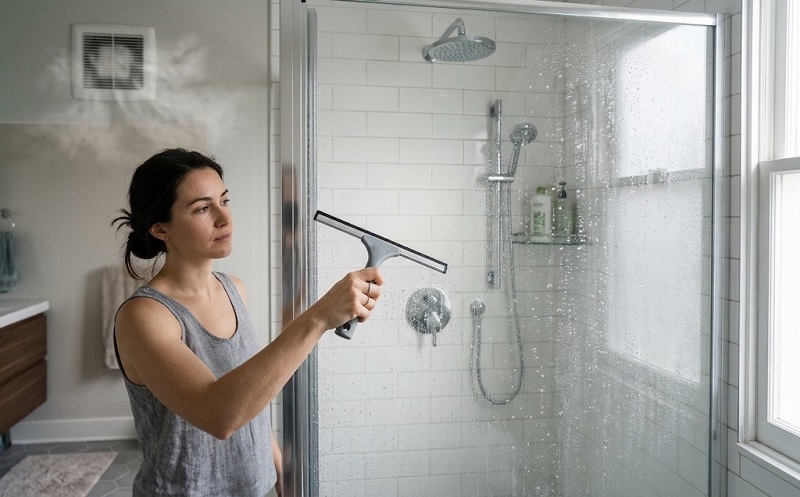
- Daily Squeegee Use: Keep a soft rubber squeegee inside the shower enclosure. Take thirty seconds after every shower to wipe down the glass panels from top to bottom, removing water droplets before they dry and drop minerals on the surface.
- Microfiber Towel Wipe Down: Follow up squeegee passes by drying metal door hardware, rubber seals, and corner joints with a quick-drying microfiber towel to eliminate pooling water.
- Switching to Liquid Body Wash: Replace traditional bar soaps with liquid body washes or shower gels. Liquid soaps contain fewer animal fats and fatty acids, drastically cutting down soap scum formation on glass panels and tiled surfaces.
- Improving Bathroom Ventilation: Leave exhaust fans running for twenty minutes after showering, or keep shower doors propped open to encourage airflow. Lowering bathroom humidity stops water droplets from hanging on glass panels for extended periods.
By choosing effective cleaning agents, employing safe scrubbing tools, sealing the glass against moisture, and wiping down doors after daily use, you keep your glass shower enclosures clear, clean, and beautiful for the long haul.