Shower Panel Buying Guide: Features Every Buyer Should Check Before Ordering

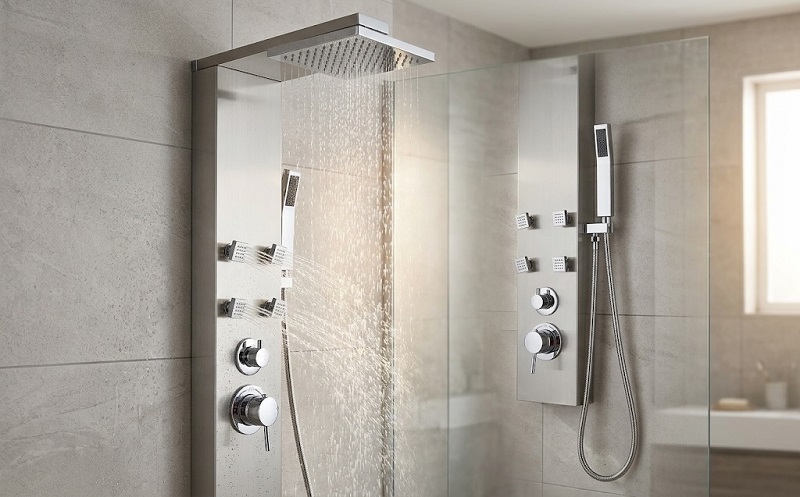
A shower panel is not just a vertical strip of metal with a few nozzles screwed to it. It is the central control point for the entire showering experience, handling water pressure, temperature, spray patterns, and sometimes even lighting and audio. Buyers who treat it as an afterthought often end up with weak pressure, scalding surprises, or a unit that looks impressive in the box but fails within a year. Knowing what to check before ordering saves money, frustration, and the awkward phone call to a plumber asking why the jets barely reach your shoulders.
Valve Core and Temperature Control
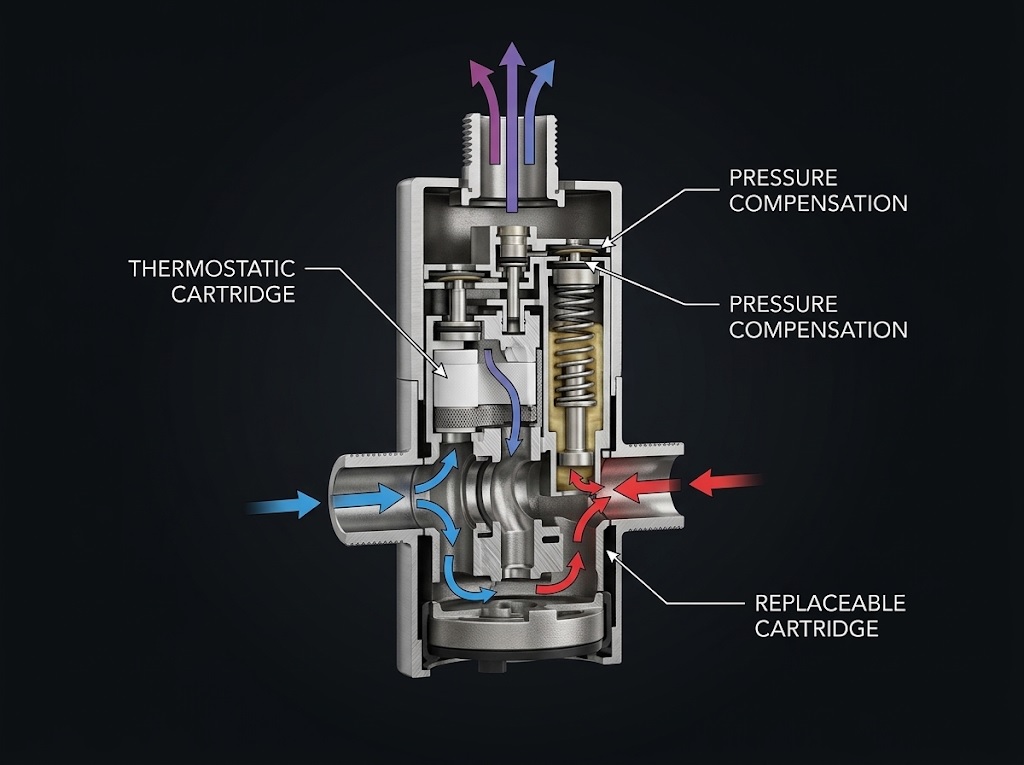
The first feature to examine is the valve core. This is the internal mechanism that mixes hot and cold water and delivers it to the outlets at a stable temperature. A basic mixer valve relies on manual adjustment every time the water pressure fluctuates, which means a toilet flush elsewhere in the house can send a blast of hot or cold water through the panel. A thermostatic valve solves this by maintaining the set temperature automatically, compensating for pressure changes within a fraction of a second. For families with children or elderly users, this is not a luxury. It is a safety feature that prevents burns. Look for a valve certified to EN 1111 or ASSE 1016 standards, which guarantee performance within a 2-degree Celsius tolerance. The valve cartridge should be replaceable without dismantling the entire panel, because even the best cartridges wear out after five to ten years of daily use.
Water Pressure Compatibility
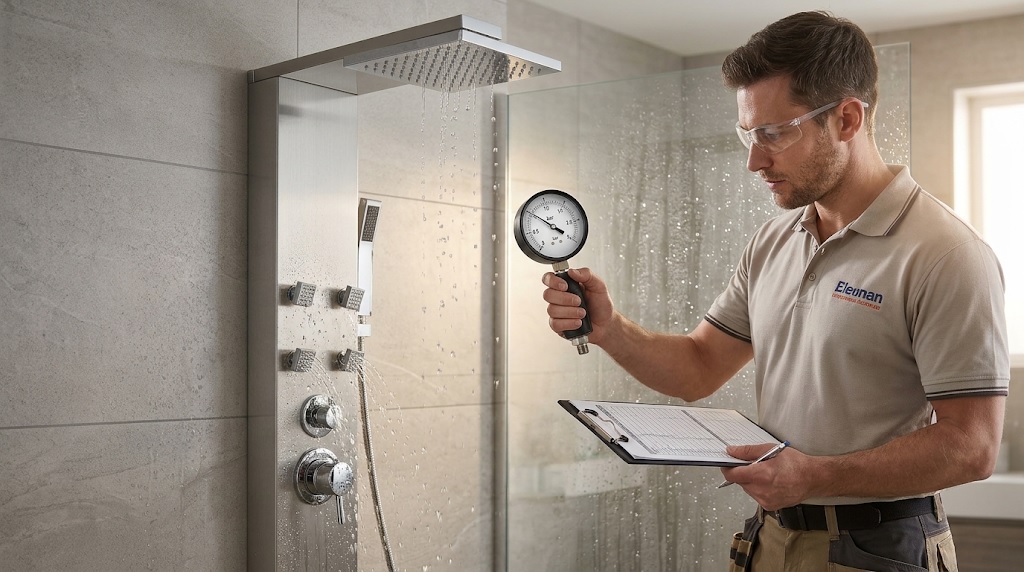
Water pressure compatibility is the next checkpoint. Shower panels with multiple body jets demand more flow than a simple overhead rose. A typical three-jet panel needs at least 1.5 bar of sustained pressure to deliver a satisfying massage effect. If your household pressure runs lower, around 0.5 to 1 bar, the jets will dribble rather than spray, and the rainfall head will feel like light drizzle. Some panels include an integrated pump to boost pressure, but these add noise, electrical complexity, and a point of failure. Before ordering, measure your actual pressure at the shower outlet with a gauge, not at the main stopcock where the reading is usually higher. If the pressure is borderline, choose a panel with fewer jets or smaller nozzle diameters, which need less flow to perform well.
Panel Body Materials
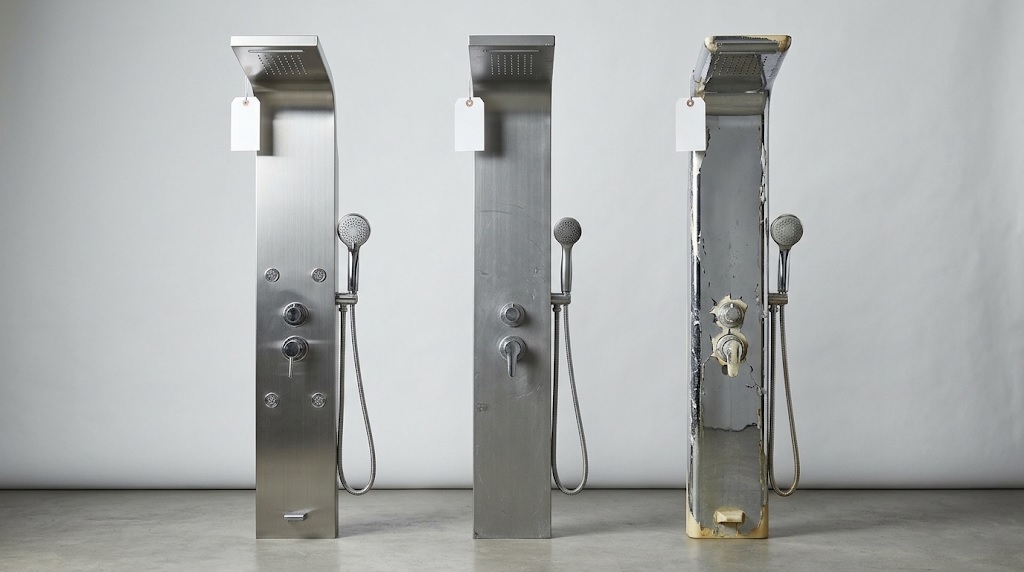
The material of the panel body determines how it ages and how easy it is to keep clean. Stainless steel in a brushed or polished finish is the most common choice for mid-range and premium panels. It resists corrosion, handles temperature cycling without warping, and wipes clean with a damp cloth. The grade matters. 304 stainless is standard for indoor use and holds up well in normal bathroom humidity. 316 marine-grade stainless is overkill for most homes but worth considering for coastal properties where salt air accelerates corrosion. Aluminum panels are lighter and cheaper but scratch more easily and can develop a chalky oxidation film in hard water areas. Plastic panels, usually ABS or PVC with a chrome-effect coating, are the budget option. They are light, easy to install, and cost a fraction of metal alternatives. The downside is longevity. The coating flakes at the edges after a few years, and the plastic yellows and becomes brittle with prolonged UV exposure if the panel sits near a window.
Spray Configuration and Body Jets
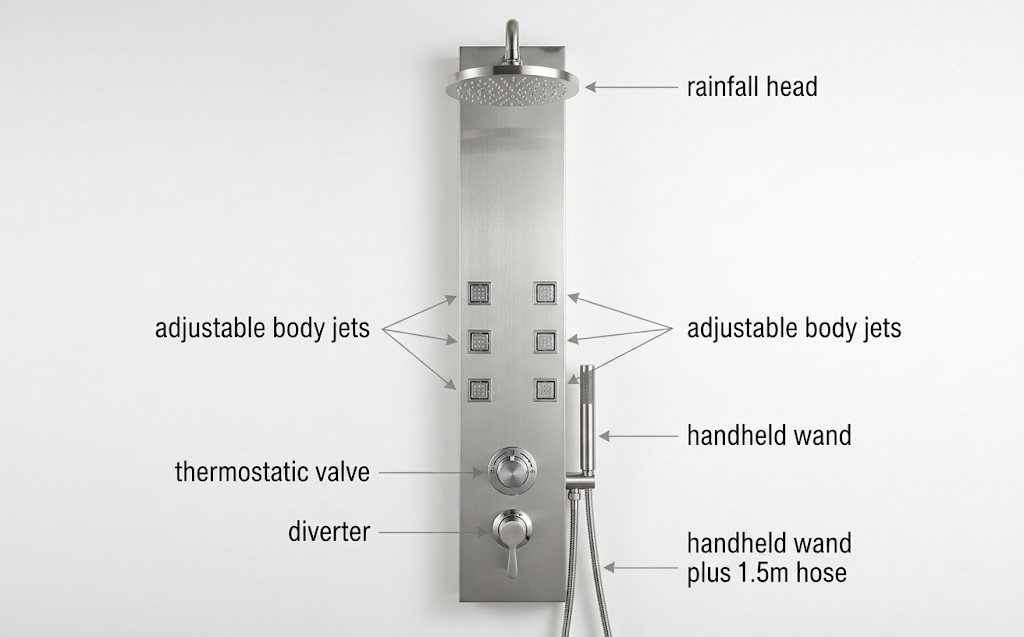
The spray configuration defines what the panel actually does. At minimum, a panel should offer an overhead rainfall shower, a handheld wand, and at least one body jet column. The rainfall head should be large enough to cover the user’s shoulders without constant repositioning. A 200 millimeter diameter is the practical minimum for an adult. The handheld wand needs a flexible hose of at least 1.5 meters and a mounting bracket that adjusts for height, because households rarely share the same stature. Body jets are where opinions divide. Some users love the hydro-massage effect on the back and shoulders. Others find the sensation too aggressive or the positioning awkward for their height. If possible, test a panel with jets in a showroom before committing. Jets with adjustable angle and flow rate are more versatile than fixed nozzles. Panels with four or more jet columns look impressive but rarely deliver proportionally more benefit, and they increase water consumption significantly.
Diverter Mechanism
The diverter mechanism controls which outlets are active at any given time. A simple three-way diverter switches between overhead, handheld, and jets. More complex panels offer simultaneous operation, allowing the rainfall head and body jets to run together. This sounds appealing but requires higher pressure and flow rate than most domestic supplies can deliver. In practice, simultaneous operation often results in two weak streams rather than one strong one. A sequential diverter that runs one outlet at a time is more honest about the panel’s capabilities and less likely to disappoint. The diverter handle or knob should turn smoothly with a positive click at each position. Loose, vague diverters leak internally and waste water.
Digital Controls and Temperature Display
Temperature display and digital controls are increasingly common, especially on panels imported from Chinese manufacturers. A digital screen showing the exact water temperature removes the guesswork from adjustment and adds a modern aesthetic. Some panels go further, offering touch controls, memory presets for different users, and even Bluetooth speakers. These features are nice to have but introduce electrical components into a wet environment. Check the IP rating of any digital element. IP65 is the minimum for safe operation in a shower enclosure, meaning the device is protected against water jets from any direction. Lower ratings risk failure within months. Also confirm whether the digital components are powered by replaceable batteries, a wired transformer, or a small hydro-generator that runs off the water flow itself. Battery-powered units are the simplest but need regular replacement. Wired units require a licensed electrician. Hydro-generators are elegant but can struggle at low flow rates.
Installation Requirements
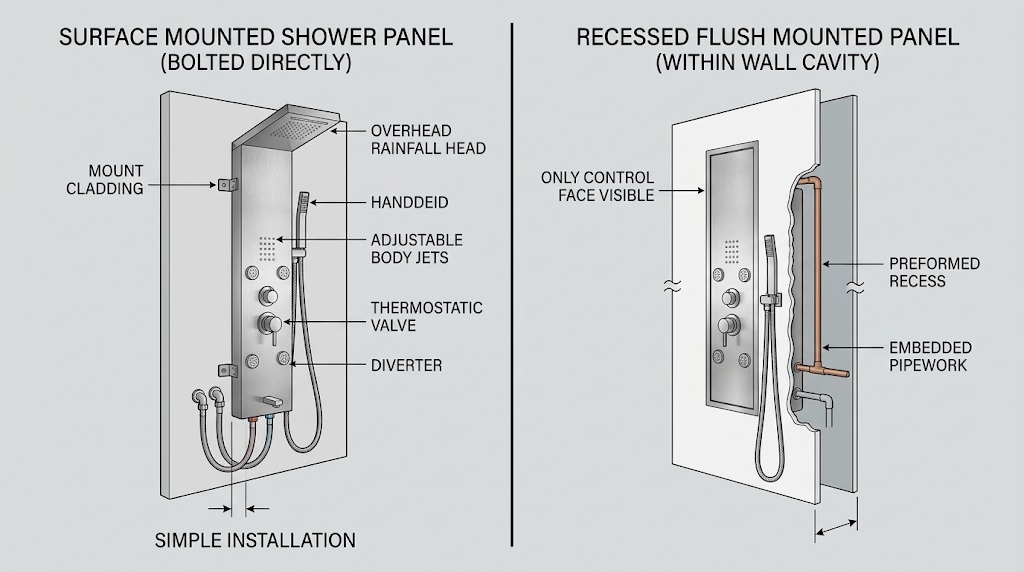
Installation requirements vary significantly between models and are often underestimated. A surface-mounted panel bolts directly to the wall and connects to existing hot and cold supplies through exposed flexible hoses. This is the easiest installation and the most forgiving of plumbing that is not perfectly aligned. A recessed or flush-mounted panel sits within a wall cavity, with only the control face and outlets visible. This looks cleaner but requires precise plumbing rough-in during construction or a major wall opening during renovation. The depth of the recess must match the panel body exactly, or the faceplate will sit proud of the wall or fall short of it. Before ordering a recessed panel, confirm the wall depth, the pipe center measurements, and whether the manufacturer provides an installation template. Many do not, and improvisation on site rarely ends well.
Connection Size and Thread Standards
The connection size and thread standard are easy to overlook but critical for compatibility. Most panels use standard 15 millimeter or half-inch BSP thread connections, but some European models use metric fine threads that do not seal properly with standard washers. American panels often use NPT threads, which are incompatible with BSP without an adapter. If you are importing a panel from China for a European or North American market, verify the thread standard and include adapter fittings in the order if needed. A plumber who discovers a thread mismatch on installation day will charge extra for the delay and may not have the right adapter in the van.
Finish and Color Options
Finish and color are where personal taste meets practical reality. Chrome remains the most popular finish because it is bright, reflective, and matches the majority of existing bathroom hardware. It also shows water spots and fingerprints more than any other finish, which means daily wiping if you want it to look showroom-fresh. Brushed nickel and matte black hide water marks better and have become the default choices for contemporary bathrooms. Brushed gold and rose gold are gaining traction in luxury markets but carry a price premium and can be harder to match with accessories. Whatever finish you choose, confirm that the manufacturer uses PVD coating rather than simple electroplating. PVD is harder, more scratch-resistant, and far less likely to peel or discolor over time.
Warranty Terms
Warranty terms reveal a lot about the manufacturer’s confidence in their product. A one-year warranty is standard for budget panels and covers manufacturing defects only. Three to five years indicates a mid-range product with better component quality. Lifetime warranties on the valve cartridge and finish are the mark of a premium panel, though the fine print often excludes damage from hard water scale, improper installation, or use of abrasive cleaners. Read the warranty document before ordering, not after a problem develops. Pay attention to whether the warranty is honored internationally or only in the country of manufacture. For buyers importing from China, a factory warranty that requires the panel to be shipped back to Shenzhen is effectively worthless.
Hard Water Compatibility
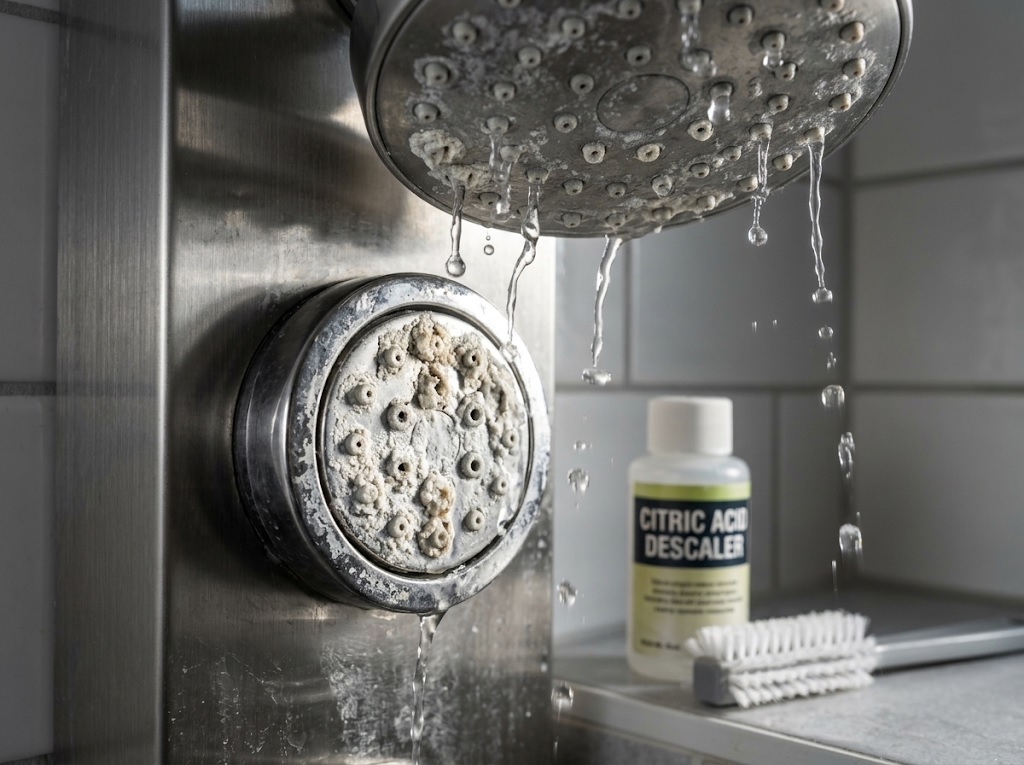
Hard water compatibility is a regional issue that can destroy an otherwise excellent panel. In areas with calcium-rich water, scale builds up inside the valve, the jets, and the rainfall head, reducing flow and eventually blocking outlets completely. Some panels include self-cleaning nozzles made from silicone, which flex when water pressure changes and dislodge scale particles. This helps but does not eliminate the need for periodic descaling. Panels with removable jet inserts are easier to clean than fixed nozzles. If your water hardness exceeds 200 parts per million, plan on descaling the panel every three to six months with a mild acid solution, or install a whole-house water softener upstream.
Noise Levels
Noise is rarely mentioned in product descriptions but matters for households where the bathroom adjoins a bedroom. The sound of water rushing through a panel at full flow can reach 70 decibels or more, comparable to a vacuum cleaner. Panels with ceramic disc valves run quieter than those with rubber washers, and larger-diameter internal passages reduce turbulence and the associated hiss. If noise is a concern, look for panels that advertise quiet operation or ask the supplier for a decibel rating. There is no industry standard for shower panel noise, so any number provided is better than none.
Price Ranges and Value
Price is the final filter, and it correlates roughly with quality but not perfectly. A basic surface-mounted panel in stainless steel with a mixer valve, rainfall head, handheld wand, and two body jets costs between 150 and 300 US dollars at factory level. Adding a thermostatic valve pushes the price to 250 to 450 dollars. Digital displays, multiple jet columns, and premium finishes take the price to 400 to 800 dollars. Above 800 dollars, you are paying for brand reputation, custom finishes, or imported European components rather than fundamentally better performance. For most residential and hospitality projects, the sweet spot is 250 to 500 dollars, where thermostatic control, solid stainless construction, and a five-year warranty are all achievable.
Ordering a shower panel without checking these features is like buying a car based on the color of the paint. The panel has to work reliably under pressure, literally and figuratively, for years after installation. Taking time to verify valve quality, pressure compatibility, material grade, spray configuration, installation requirements, and warranty terms before placing the order leads to a shower experience that feels effortless every single morning.