Outdoor Soaking Tub Guide: Materials, Plumbing, and Drainage Setup

Outdoor soaking tub projects have moved from occasional vacation luxury to mainstream residential outdoor living design. Installing an outdoor bath creates a dedicated sanctuary for wellness and relaxation right in your backyard, patio, or rooftop terrace. However, bringing a soaking tub outside demands far more technical planning than a standard indoor bathroom install. Outdoor tubs face year-round environmental elements including freezing temperatures, heavy rainfall, intense UV exposure, and ground movement.
To ensure your outdoor bathing setup remains durable, comfortable, and fully functional across all seasons, you must carefully evaluate three core structural pillars: material selection, plumbing supply routes, and wastewater drainage systems.
Selecting Weather-Resistant Materials for Outdoor Soaking Tubs
The exterior environment puts severe stress on bathtub surfaces. Temperature fluctuations cause expansion and contraction, while direct sun breaks down unstable binders. Choosing a high-performance material guarantees your tub maintains its structural integrity and finish over decades.
Solid Surface Composites
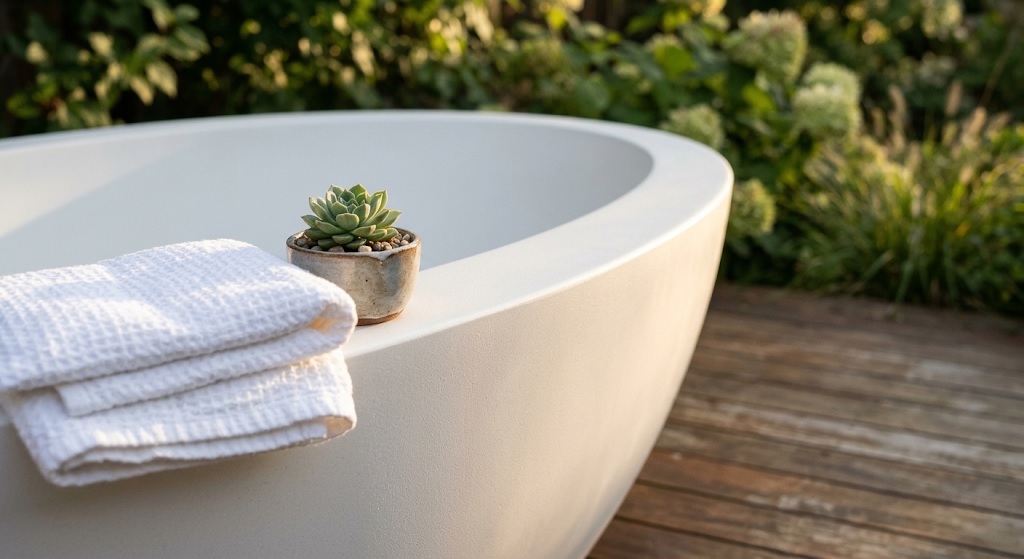
Matte solid surface composites—made from natural mineral powders bound with high-grade acrylic resins—are exceptional for outdoor soaking tubs. The material is non-porous throughout its entire thickness, meaning water, frost, and ambient moisture cannot penetrate the surface to cause internal cracking during freeze-thaw cycles. Solid surface tubs resist UV fading, remain smooth against bare skin, and can be easily sanded and buffed to remove minor surface scuffs or environmental residue.
Stainless Steel and Copper
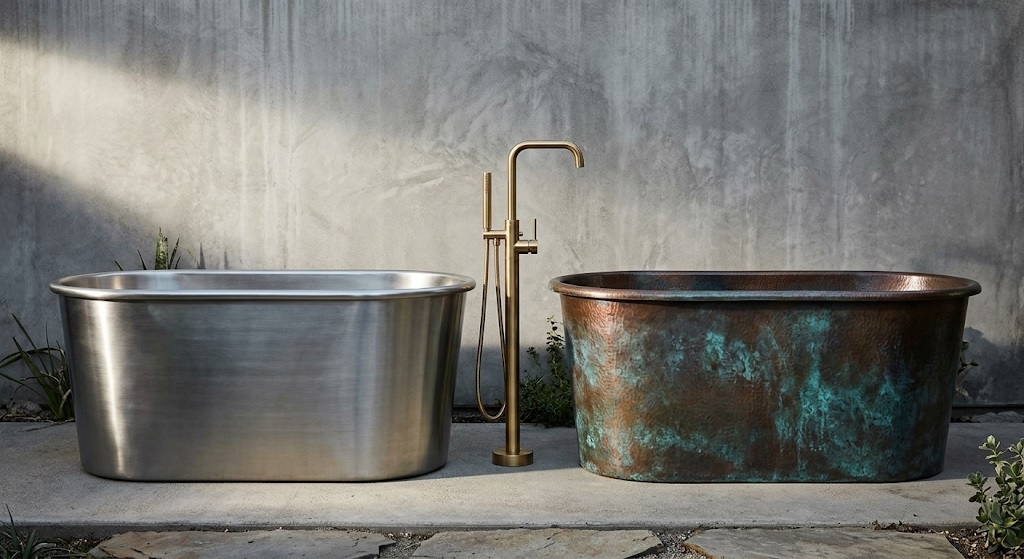
Metal soaking tubs offer incredible longevity and industrial or rustic aesthetics:
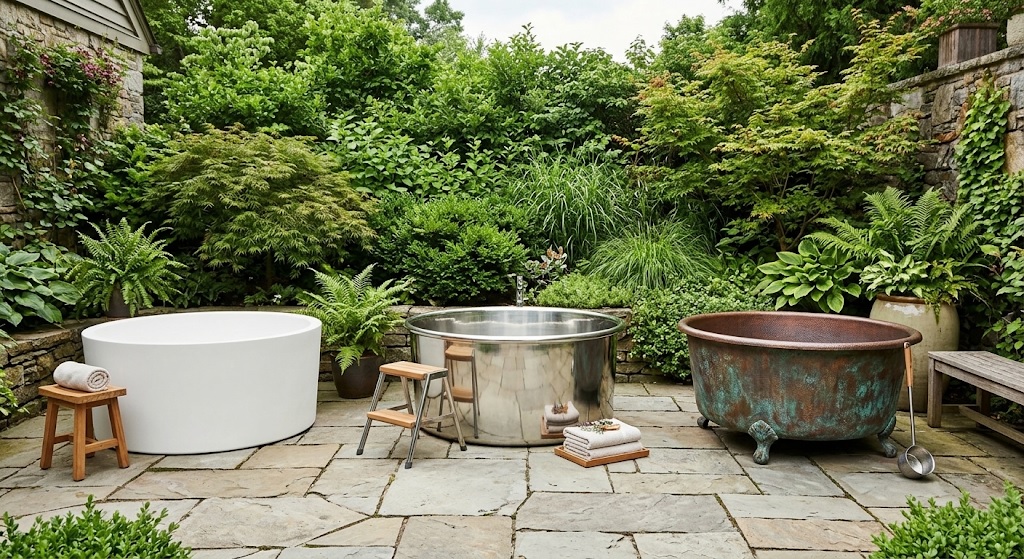
- Stainless Steel: Marine-grade 316 stainless steel provides superior resistance to rust and corrosion, making it the preferred metal for coastal installations exposed to saltwater air. Stainless steel tubs heat up quickly when filled and require zero surface sealants.
- Copper: Copper tubs naturally form a rich patina over time as they react with rain and air. Copper possesses natural antimicrobial properties, which help keep the water cleaner. However, raw copper requires regular maintenance if you wish to preserve its original warm metallic shine rather than letting it age naturally into a deep bronze or green patina.
Thermally Modified and Natural Woods
Traditional cedar, teak, and hinoki wood tubs deliver a classic rustic soaking experience with natural aromatic oils. However, wooden tubs require strict ongoing care. Cedar and teak expand when wet to create a watertight seal; if left empty and dry for long periods under intense summer heat, the wood planks shrink and pull apart, leading to leaks. Thermally modified timber, which undergoes high-heat treatment to alter its cellular structure, offers enhanced stability and rot resistance for exterior surrounds.
Cast Iron and Enameling
Porcelain-enameled cast iron tubs are extremely heavy and offer unmatched heat retention. While the interior glass enamel holds up well against water, any chip on the outer rim exposes raw iron to moisture, leading to rapid rust formation. For outdoor installations, cast iron tubs should be installed within a sheltered patio structure or finished with a protective exterior coating.
Engineering Outdoor Plumbing and Water Supply Lines
Running clean hot and cold water to an outdoor soaking tub requires adherence to local plumbing codes and protection against seasonal weather hazards.
Freeze Protection and Supply Line Insulation
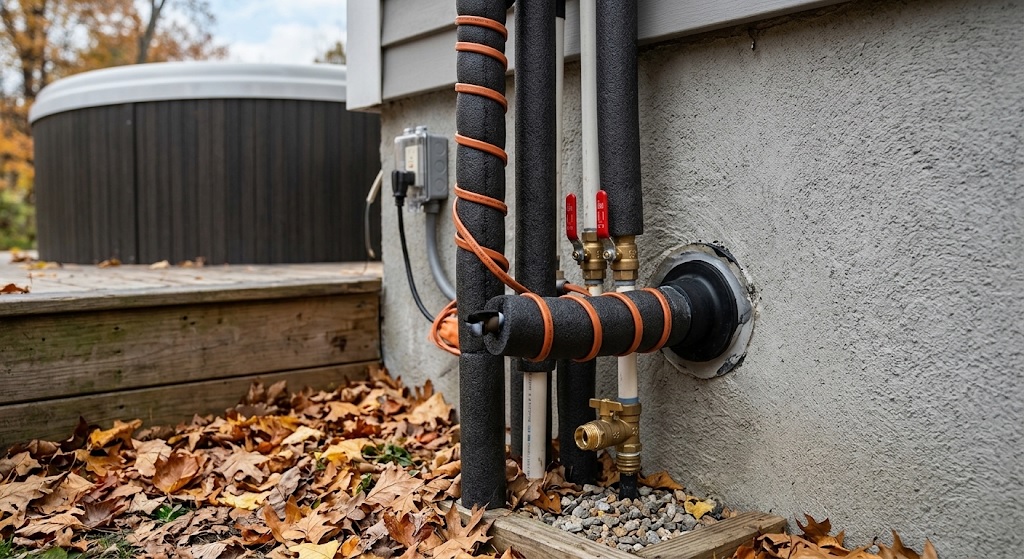
In regions subject to freezing winter temperatures, water lines buried in the ground or run along exterior walls will freeze and burst if not engineered correctly:
- Deep Trenching: Water supply lines should be buried below the local frost line depth.
- Auto-Drain and Shutoff Valves: Install dedicated interior shutoff valves and low-point drain valves inside your basement or utility room. This allows you to easily isolate and drain the outdoor water lines completely before the first winter frost.
- Electric Heat Trace Cables: For exposed pipe sections above ground, applying self-regulating heat trace cables wrapped in waterproof insulation keeps water flowing during cold snaps.
Water Pressure and Tankless Water Heaters
Filling a large 80-to-150-gallon outdoor soaking tub using a standard indoor water heater can exhaust your household hot water supply quickly, leaving you with a lukewarm bath. Installing a dedicated tankless gas or electric water heater near the outdoor tub ensures a continuous flow of hot water on demand. Tankless units only heat water when needed, keeping energy costs manageable while supplying fresh hot water to large soaking vessels.
Deck-Mounted and Wall-Mounted Valve Assemblies
Plumbing fixtures designed for indoor use often corrode quickly when exposed to direct sunlight and rain. Select solid brass, marine-grade stainless steel, or bronze outdoor-rated shower and tub fillers. Floor-mounted freestanding tub fillers with subterranean mounting brackets offer clean visual lines while securing the supply pipes against wind and movement.
Designing Effective Wastewater Drainage Systems
Managing graywater disposal is often the most complex aspect of an outdoor soaking tub installation. A full tub holds hundreds of pounds of water that must be discharged quickly and safely without flooding your yard, undermining deck footings, or violating municipal environmental codes.
Direct Connection to Municipal Sewer Lines
Connecting the tub drain directly to your home’s main sewer line is the most robust and environmentally compliant disposal method. Wastewater flows through standard PVC piping connected to the main soil stack. This method is mandatory if you use bath oils, scented salts, soaps, or body washes, as untreated soap runoff must pass through municipal wastewater treatment facilities rather than draining into ground soil.
Dry Well and Gravel Soakaway Systems
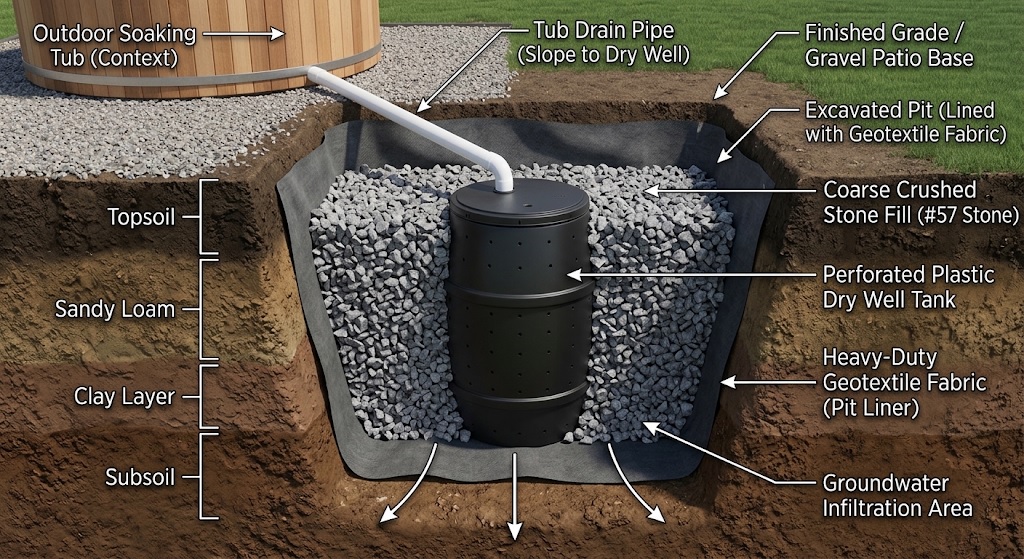
If local building codes permit, and you soak exclusively in pure untreated water without chemical soaps or additives, a dry well system offers a practical off-grid drainage solution:
- Dig a pit located at least ten feet away from house foundations, deck posts, and property lines.
- Line the pit with heavy-duty geotextile landscape fabric to prevent dirt intrusion.
- Fill the excavation with coarse crushed stone or install a perforated plastic dry well tank wrapped in gravel.
- Run the tub drain pipe directly into the rock bed, allowing graywater to slowly percolate back into the surrounding soil profile without causing surface erosion.
Continuous Recirculation and Filtration Assemblies
For homeowners who prefer keeping their outdoor soaking tub filled and heated constantly like a traditional hot tub, integrating a continuous filtration system is necessary. This requires a small circulation pump, a cartridge or sand filter, and an inline heater or UV sanitizer. Continuous filtration minimizes total water usage by allowing you to reuse the same water volume for several weeks rather than draining and refilling after every single soak.
Structural Foundation and Site Preparation
Water is heavy—weighing approximately 8.34 pounds per gallon. A 100-gallon solid surface soaking tub filled with water and an adult bather can easily exceed 1,200 pounds total weight concentrated within a small four-by-six-foot footprint.
Concrete Slab Foundations
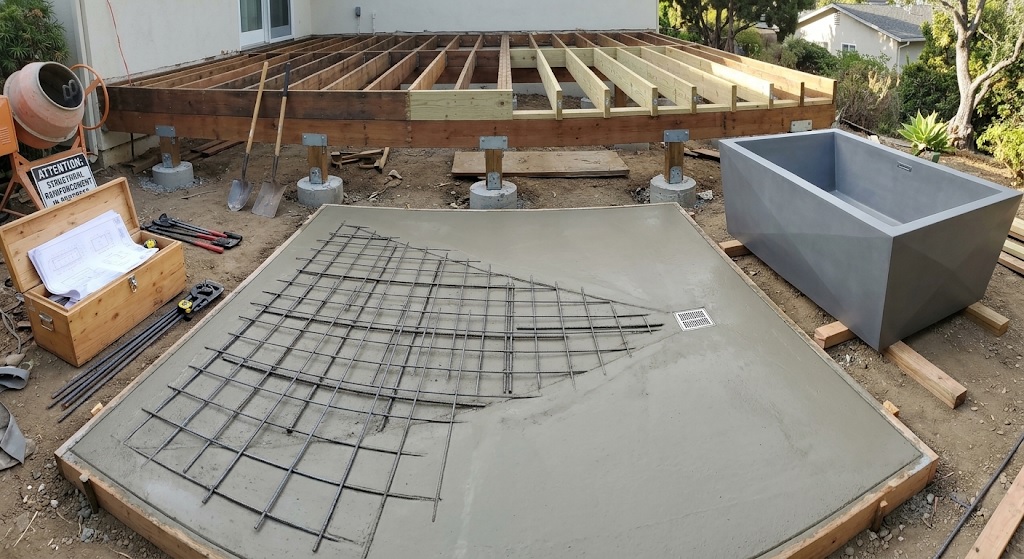
Pouring a dedicated four-to-six-inch reinforced concrete pad over a compacted gravel base provides the strongest, most level foundation for an outdoor tub. The concrete surface should feature a micro-slope of roughly one-eighth inch per foot directing rainwater away from the tub base while keeping the tub rim level.
Reinforcing Existing Decks
If you plan to install a soaking tub on an existing elevated wooden or composite deck, hire a structural engineer to evaluate the framing. Standard residential decks are designed to support 40 to 50 pounds per square foot, whereas a filled soaking tub easily creates point loads exceeding 150 to 200 pounds per square foot. Adding structural posts, sistering existing joists, and installing heavy-duty ledger beams are common retrofits needed to support the load safely.
Privacy, Shelter, and Year-Round Usability
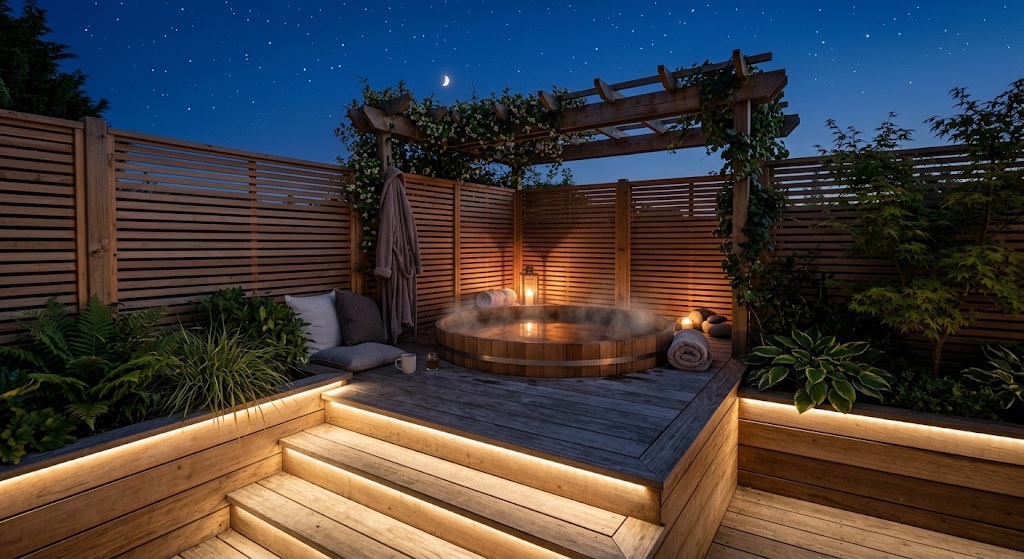
Designing a comfortable outdoor bathing nook involves considering wind, sun angles, neighbor sightlines, and general atmosphere.
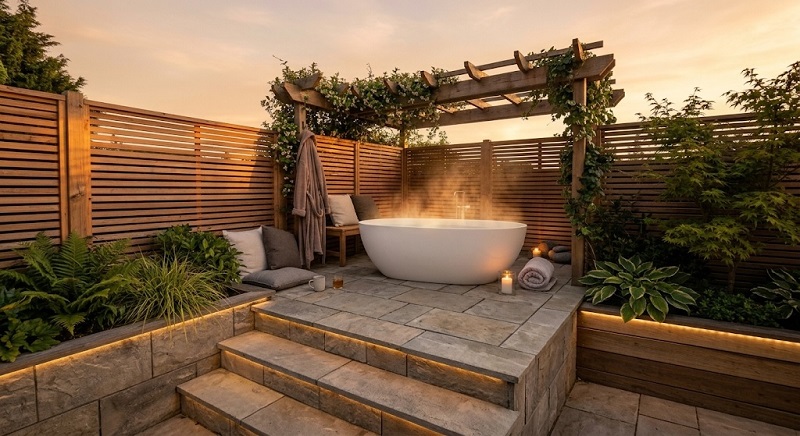
- Privacy Screens: Slatted wooden perimeter screens, bamboo fencing, or dense evergreen hedges like arborvitae shield the bath area from surrounding properties while maintaining outdoor ventilation.
- Overhead Shelter: Installing a pergola, solid roof overhang, or retractable awning protects bathers from falling rain and tree debris, extending tub usability into late autumn and early spring.
- Outdoor Lighting: Soft, indirect LED strip lighting mounted beneath tub plinths, deck stairs, or surrounding planters provides clear nighttime visibility without creating harsh glare that ruins stargazing opportunities.
By balancing proper material selection with code-compliant plumbing routes, freeze protection, and solid structural foundations, your outdoor soaking tub will deliver a reliable, luxurious year-round retreat for your home.