One-Piece Bathtub vs. Built-In Tub: Which Should You Buy for Your Home?

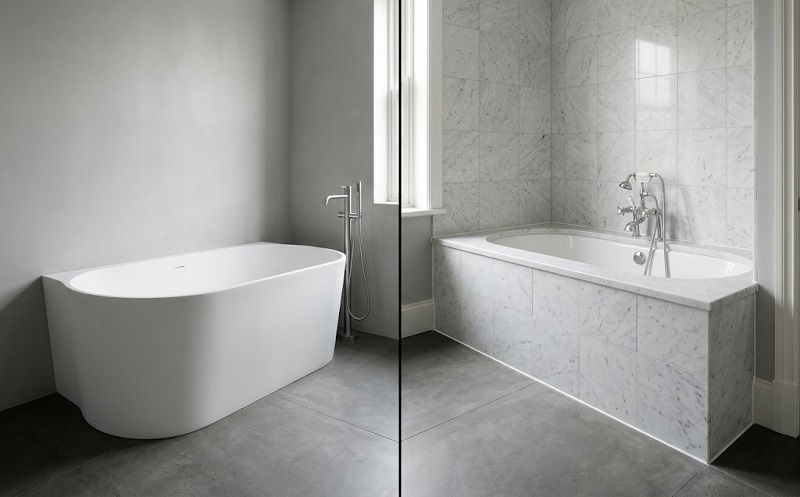
One-piece bathtub vs. built-in tub decisions represent a major crossroads for homeowners, general contractors, and interior designers during a bathroom remodel or new construction project. Choosing between these two distinct fixture styles impacts far more than just the initial purchase price. It dictates the installation complexity, plumbing access, routine cleaning requirements, floor structure demands, and overall spatial aesthetic of your bathroom for decades to come.
Understanding the structural differences, material variations, installation requirements, and long-term performance factors of both options allows you to make an informed investment tailored directly to your lifestyle and architectural footprint.
Understanding One-Piece Bathtub Construction and Features
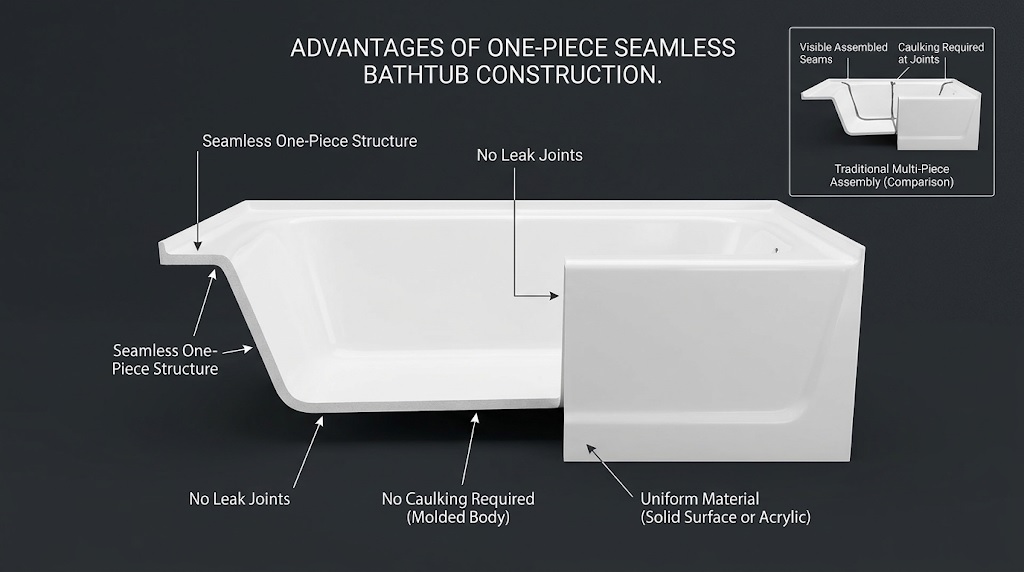
A one-piece bathtub refers to a seamless fixture where the tub basin, surrounding apron, and integrated wall surround or deck are molded together as a single continuous structure during manufacturing. Alternatively, freestanding one-piece tubs feature a single seamless shell where the inner soaking basin and outer skirt form an unbroken exterior body without visible seams or joins.
Seamless Structural Integrity
The defining physical characteristic of a one-piece bathtub is its complete lack of assembly joints or perimeter seams. Because the entire body is cast or heat-formed from a single material mass, there are no structural gaps where water can penetrate, sit, or cause subfloor damage over time. This continuous construction eliminates vulnerable caulk lines along the tub deck, drastically lowering the risk of internal leaks.
Common Material Formulations
One-piece tubs rely heavily on composite materials capable of being molded into continuous forms without cracking under high stress:
- Acrylic: Vacuum-formed acrylic sheets reinforced with structural fiberglass offer high thermal retention, a warm surface texture, and excellent resistance to yellowing.
- Solid Surface Composites: Premium one-piece tubs utilize a blend of natural mineral powders and acrylic or polyester resins. This creates a dense, stone-like feel with a uniform matte or satin finish throughout the entire material thickness.
- Cast Iron and Enameling: Traditional one-piece cast iron units feature a heavy iron core coated in molten porcelain enamel, offering extreme durability and scratch resistance, albeit at a significantly higher total weight.
Core Benefits of One-Piece Tubs
The primary appeal of a one-piece bathtub centers around maintenance simplicity and structural consistency. Cleaning requires minimal effort because there are no grout lines or silicone seams where soap scum and mildew accumulate. Additionally, the lack of separate wall panels or multi-piece apron attachments means the tub maintains a sleek, uniform visual presence that fits effortlessly into minimal, modern interiors.
Exploring Built-In Bathtub Designs and Configurations
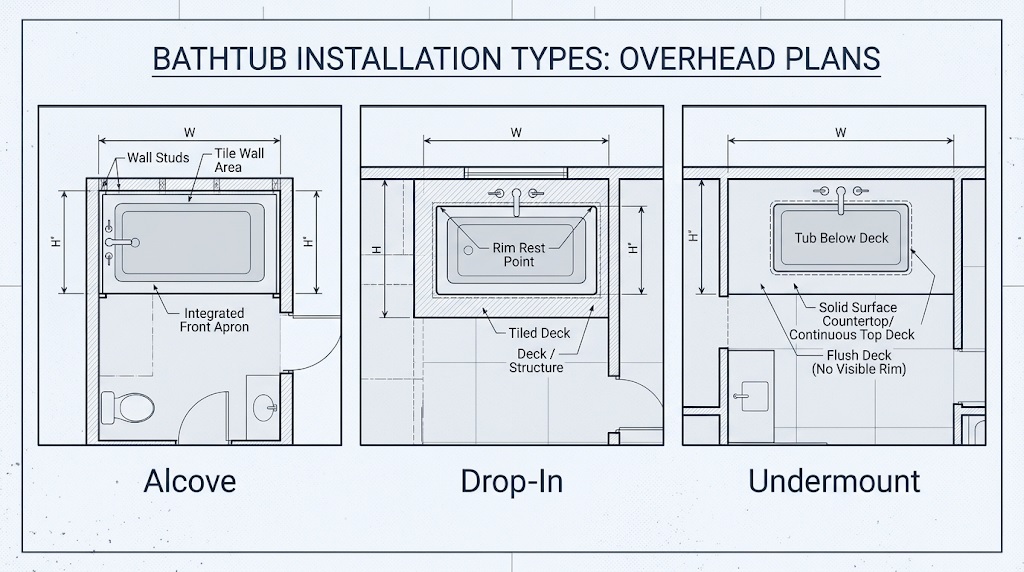
A built-in bathtub, often referred to as a drop-in or alcove tub, consists of a standalone basin installed into a pre-framed enclosure, deck, or structural surround. The surrounding platform is finished separately using materials like ceramic tile, natural stone, porcelain slabs, or waterproof wood paneling.
Modular Customization Options
Unlike factory-molded one-piece units, built-in tubs separate the water vessel from the surrounding wall and floor finishes. This modular approach grants total design flexibility. You can pair a standard white acrylic drop-in basin with custom floor-to-ceiling marble wall tile, integrated granite counter ledges, or decorative mosaic skirts that match your vanity countertops.
Installation Layout Variants
Built-in bathtubs accommodate several distinct spatial configurations depending on room dimensions:
- Three-Wall Alcove: The tub rests securely within a recessed three-wall nook, featuring a single open front side finished with a tile flange or apron panel.
- Drop-In Deck Mount: The basin lowers into a custom-built timber or steel frame covered in tile or stone, leaving only the outer rim visible along the top plane.
- Undermount: The tub basin mounts beneath a solid surface countertop cutout, creating a continuous top deck surface for a flush, integrated appearance.
Key Advantages of Built-In Configurations
Built-in bathtubs excel in spatial efficiency and design integration. In tight or standard five-foot alcoves, a built-in tub utilizes every inch of available space while providing broad surrounding ledges for bath products, soap dispensers, and towels. Furthermore, if the tub basin sustains deep physical damage years down the line, replacing the inner vessel does not always require demolishing the entire surrounding wall structure.
Detailed Comparison: One-Piece vs. Built-In Tubs
Evaluating key practical metrics side by side provides clear clarity on which style best serves your immediate renovation demands and long-term expectations.
1. Installation Complexity and Labor Costs
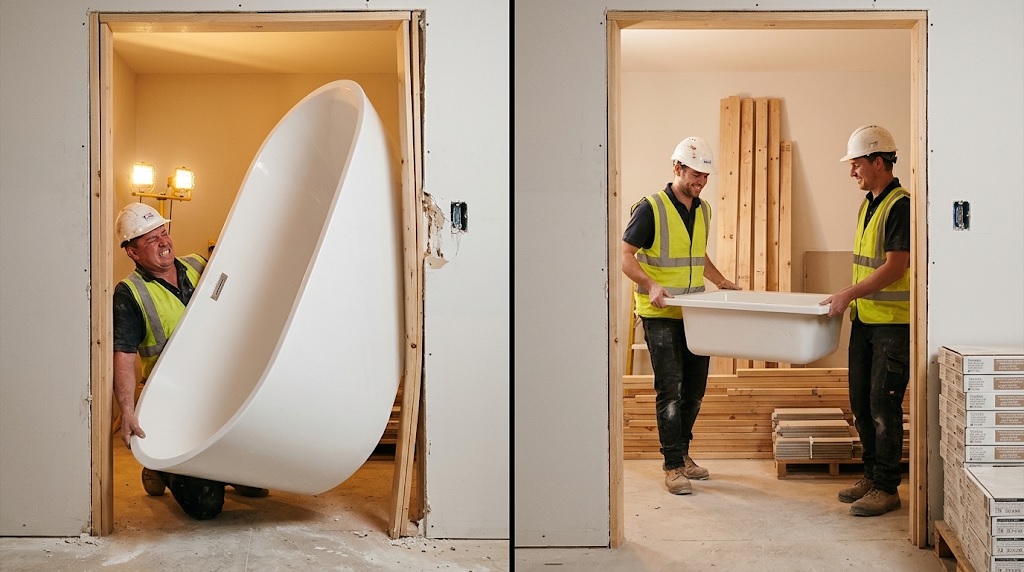
Installation protocols vary dramatically between these two designs:
One-piece bathtubs often require simple floor positioning and plumbing connections, but moving them into the room presents a logistical challenge. Because one-piece units cannot be disassembled, navigating tight hallways, narrow doorways, or steep stairwells during a remodel can prove difficult or physically impossible without removing door frames or opening drywall. However, once in the room, installation labor is relatively fast since no framing or custom tiling is required around the tub body.
Built-in bathtubs are much easier to transport into the bathroom because the basin arrives as a compact, lightweight component. However, the installation labor on site is significantly higher. Contractors must construct a custom support framework, install backer boards, apply liquid or sheet waterproofing membranes, layout and set wall or apron tile, and apply perimeter grout and caulk. This added labor generally increases the overall project timeline and initial installation budget.
2. Cleaning, Maintenance, and Hygiene
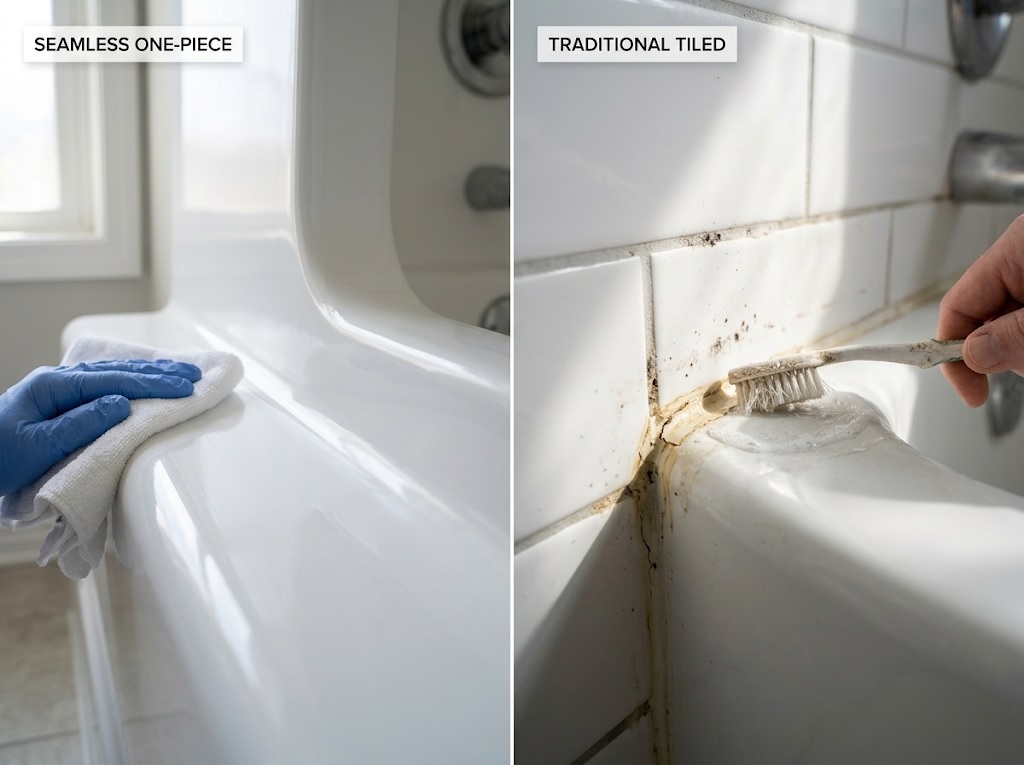
Daily maintenance requirements highlight stark operational differences between the two choices:
One-piece tubs win decisively in ease of cleaning. With no grout lines to scrub, no silicone joints to re-caulk, and smooth rounded internal transitions, maintaining hygiene requires little more than a gentle wipe down with a mild soapy solution and a soft cloth.
Built-in tubs require ongoing maintenance along the perimeter joints where the tub rim meets the tiled wall or surround deck. Over time, house settling and thermal expansion cause silicone caulk to peel or discolor, requiring periodic removal and reapplication every few years to prevent water from seeping behind the tile substrate. Grout lines also demand regular sealing to resist water staining and mold formation.
3. Thermal Performance and Comfort
Water temperature retention directly shapes the relaxing quality of a bath:
One-piece composite tubs, particularly solid surface and thick acrylic models, naturally trap heat within their solid walls, maintaining warm water temperatures for extended periods without needing constant hot water refills.
Built-in tubs depend heavily on the insulation added to the surrounding deck cavity during construction. If a contractor leaves the hollow framing underneath an acrylic built-in tub uninsulated, heat escapes rapidly into the surrounding air gap, cooling the water quickly. Filling the void around a built-in tub basin with expanding spray foam or mineral wool insulation during installation resolves this heat loss issue completely.
4. Spatial Efficiency and Storage
Room dimensions heavily dictate which style functions best within your floor plan:
Built-in tubs provide superior surface storage. The surrounding flat deck or tiled platform provides ample space for bathing accessories, shampoo bottles, candles, and bath linens without needing external wall caddies or suction shelves.
One-piece tubs, especially standalone one-piece models, require dedicated floor clearance around their perimeter to look balanced and function properly. In smaller bathrooms, a freestanding one-piece tub can create tight gaps between the tub wall and vanity, making those floor areas difficult to reach with a mop or vacuum.
5. Long-Term Value and Repairability
Looking at long-term ownership involves considering wear, tear, and future renovation flexibility:
Solid surface one-piece tubs feature homogenous material composition. If a surface scratch or stain occurs, the material can be buffed or lightly sanded directly on site to restore its original appearance. However, if a structural crack occurs in an acrylic one-piece alcove unit, replacing the entire tub requires ripping out surrounding wall finishes.
Built-in tubs allow localized repairs or partial updates. You can re-grout tile, replace decorative deck slabs, or swap out deck-mounted faucet hardware over the years to refresh the room’s design without disturbing the underlying bathtub shell.
Critical Considerations Before Making Your Purchase
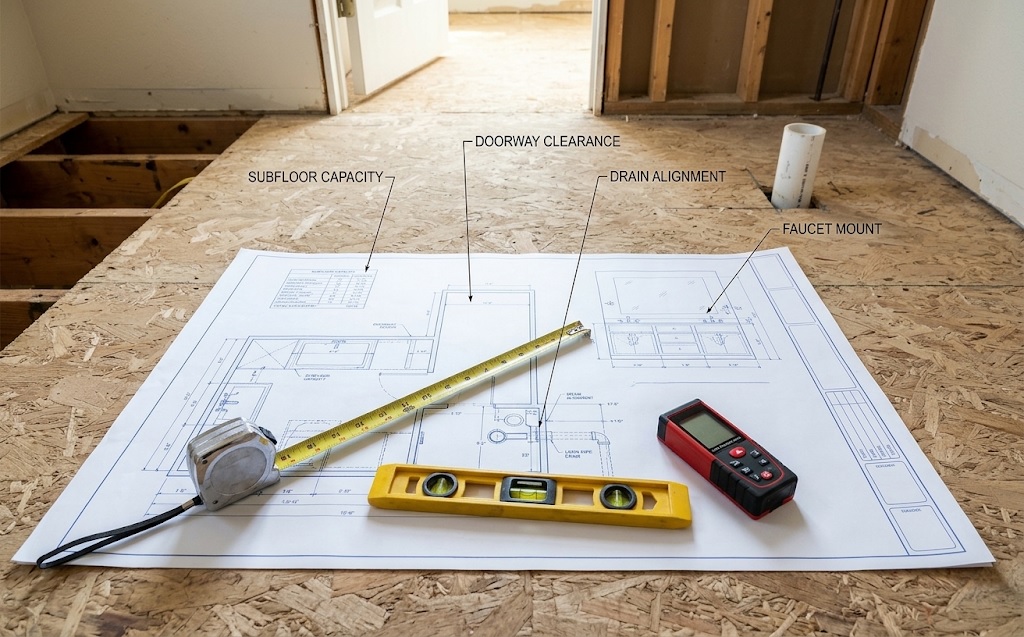
Before placing an order for either tub style, verify these practical baseline requirements with your project team:
- Structural Subfloor Capacity: Solid surface one-piece tubs or cast iron units weigh substantially more than standard acrylic built-in basins. Ensure your floor joists are rated to handle the combined weight of the tub, full water capacity, and the bather.
- Entryway Rough-In Clearances: Measure all doorways, stairwell landings, hallway corners, and elevator cabs along the delivery path to verify a rigid one-piece tub can pass through smoothly without damaging interior walls.
- Plumbing Drain and Overflow Alignments: Verify whether your project requires a left-hand, right-hand, or center drain orientation. Built-in tubs offer broad flexibility with hidden drain configurations, while one-piece units require exact alignment with subfloor rough-in plumbing locations.
- Faucet Mount Preferences: Decide early whether you want wall-mounted, floor-mounted freestanding, or deck-mounted tub filler valves, as this dictates whether the tub deck or wall framing must be pre-drilled.
Final Selection Guidance for Your Project
Choosing between a one-piece bathtub and a built-in tub ultimately comes down to prioritizing your main project goals:
Select a one-piece bathtub if your primary focus is effortless daily cleaning, clean modern aesthetics, leak-proof structural peace of mind, and a fast, streamlined installation process once the unit is on site.
Select a built-in tub if your goal is custom architectural design, maximum perimeter deck storage space, flexible material combinations, and easy maneuvering of components through tight residential doorways during renovation work.
By aligning your floor plan dimensions, maintenance expectations, and labor budget with the appropriate tub style, you ensure a comfortable, functional, and visually appealing bathroom space that serves your home reliably for years to come.