Freestanding Bathtub Reviews: Best Models, Materials, and Buying Tips for Homeowners

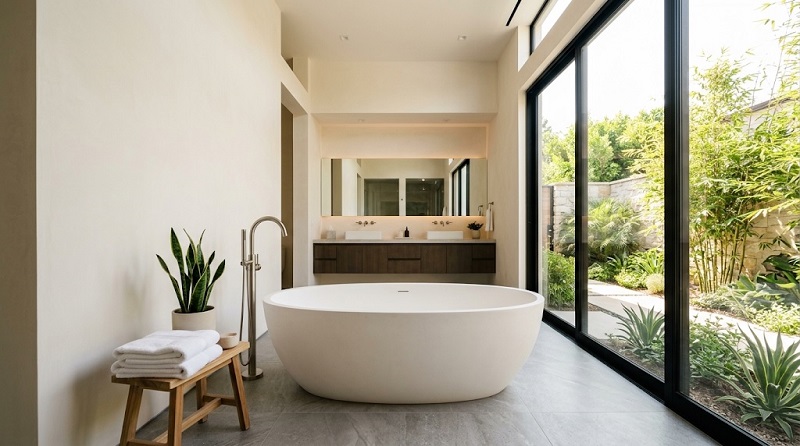
Freestanding bathtub reviews help homeowners cut through marketing noise and focus on what actually matters when investing in a centerpiece bathing fixture. A freestanding tub sits independently on the bathroom floor, unattached to surrounding walls, and commands visual attention the moment you enter the room. Unlike built-in or alcove tubs, a freestanding model makes a deliberate design statement while delivering a deep, immersive soaking experience.
This review breaks down the most popular freestanding bathtub materials, examines real-world performance, and offers practical guidance on dimensions, comfort, and upkeep.
Solid Surface Freestanding Bathtubs: The Premium Standard
Solid surface composites have become the go-to choice for homeowners seeking a luxury bathing vessel without the weight and maintenance burden of natural stone. These tubs are manufactured from a blend of natural mineral powders bound with high-grade acrylic or polyester resins, producing a dense, non-porous material that runs homogeneous throughout its entire thickness.
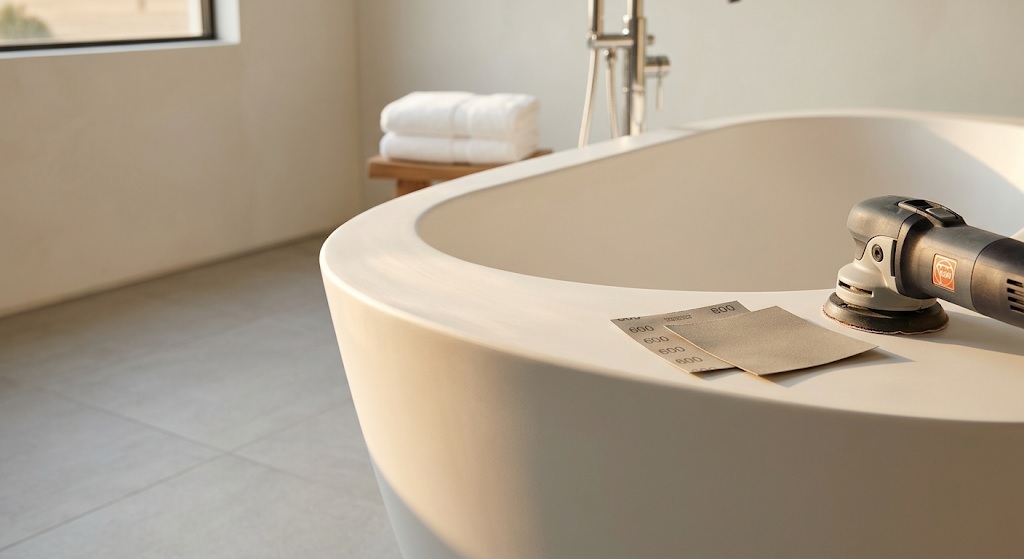
What makes solid surface stand out is its repairability. If you accidentally chip the rim, a professional fabricator can sand, fill, and buff the damaged area on site, restoring the original factory finish. Acrylic gel-coat tubs cannot be repaired this seamlessly once the gel layer is compromised.
Solid surface tubs also retain heat reasonably well. While they do not match cast iron’s thermal mass, the thick composite walls—usually 12 to 18 millimeters—hold bathwater temperature for a comfortable 20 to 30 minute soak. The matte finish feels warm and silky against bare skin, avoiding the cold-shock sensation of enamel or metal surfaces when you first step in.
On the downside, solid surface tubs are heavy. A typical model weighs between 90 and 140 pounds empty, meaning your floor framing must be evaluated before installation. Standard residential floor joists at 16-inch spacing usually handle this load, but older homes or second-floor installations may require sistered joists.
Acrylic Freestanding Bathtubs: Lightweight Versatility
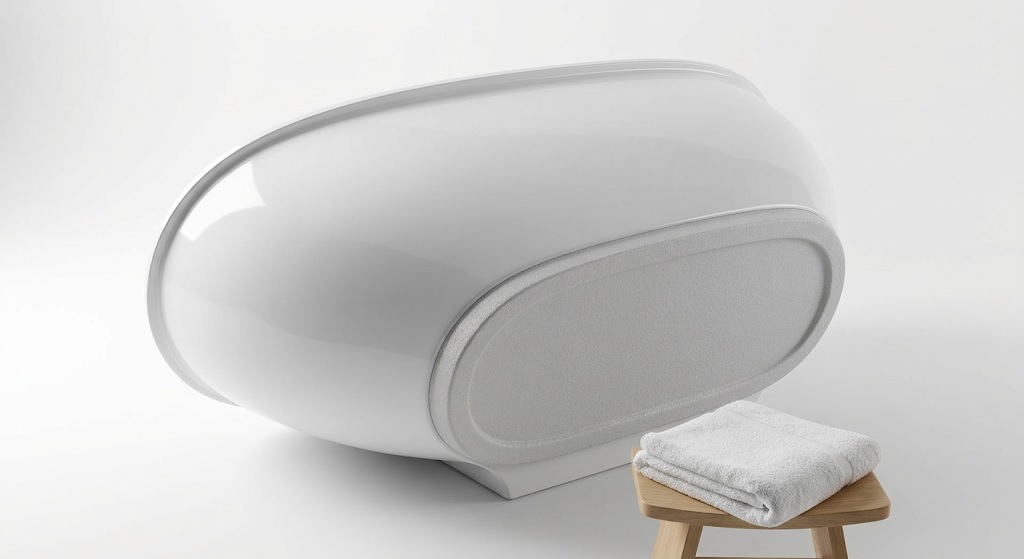
Acrylic remains the most widely sold freestanding tub material in the mid-range market. A high-quality acrylic tub consists of a thick cast acrylic sheet—usually 5 to 8 millimeters—vacuum-formed over a mold and backed with fiberglass and structural resin for rigidity. This construction keeps the empty weight manageable, typically 60 to 90 pounds, making acrylic the easiest freestanding material to maneuver through doorways and position on site.
The primary advantage of acrylic is its molding flexibility. Manufacturers can produce complex organic shapes—ovals, asymmetrical forms, slipper-style raised ends—at price points far below solid surface or cast iron. If your bathroom design calls for a sculptural soaking tub with sweeping curves and a thin-profile rim, acrylic delivers that aesthetic affordably.
Heat retention in acrylic tubs falls in the middle of the pack. The acrylic surface feels warm to the touch, but the relatively thin walls allow heat to transfer outward faster than solid surface or cast iron. Many manufacturers address this by adding foam insulation to the tub’s underside during production. If you enjoy extended soaks of 30 minutes or longer, check whether the model includes factory-applied base insulation.
One consideration with acrylic is scratch susceptibility. The surface is softer than solid surface or enamel, meaning abrasive cleaners and accidental impacts can leave visible marks over years of use. Minor scratches can be polished out with specialized acrylic compounds, but deeper gouges may require professional refinishing.
Cast Iron Freestanding Bathtubs: Heat Retention Champions
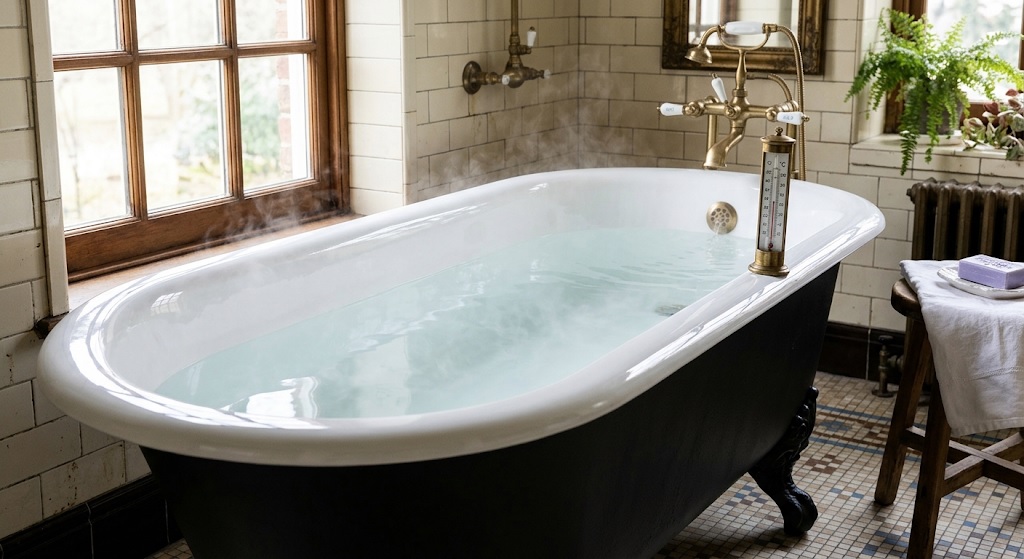
Cast iron tubs have been the benchmark for soaking performance for over a century, and the material remains undefeated in thermal mass. A cast iron freestanding tub absorbs heat from the hot water as it fills, warming the iron itself, and then radiates that stored heat back into the bathwater throughout your soak. A properly pre-warmed cast iron tub maintains comfortable bathing temperatures for 45 minutes or more, outperforming every other common material by a wide margin.
The interior is coated with vitreous enamel—essentially liquid glass fused to the iron at temperatures above 800 degrees Celsius. This enamel surface is extremely hard, highly resistant to scratching, and impervious to chemical staining from bath oils or hair dyes. A well-maintained cast iron tub retains its glossy factory appearance for 50 years or longer.
The trade-off is weight. A standard freestanding cast iron soaking tub weighs between 250 and 400 pounds empty. Combined with water and a bather, the total floor load can approach 1,000 pounds concentrated in a small area. Second-floor installations almost always require structural evaluation and reinforcement. The weight also complicates delivery—many cast iron models require two or three professional installers to navigate stairs and tight corners.
Enamel chipping is the primary long-term risk. While the glass surface is hard, it is also brittle. A heavy bottle dropped from shelf height can chip the enamel, exposing raw iron that rusts rapidly in the moist bathroom environment. Small chips can be repaired with epoxy-based enamel kits, but larger damage may require professional refinishing.
Copper and Stainless Steel Freestanding Bathtubs
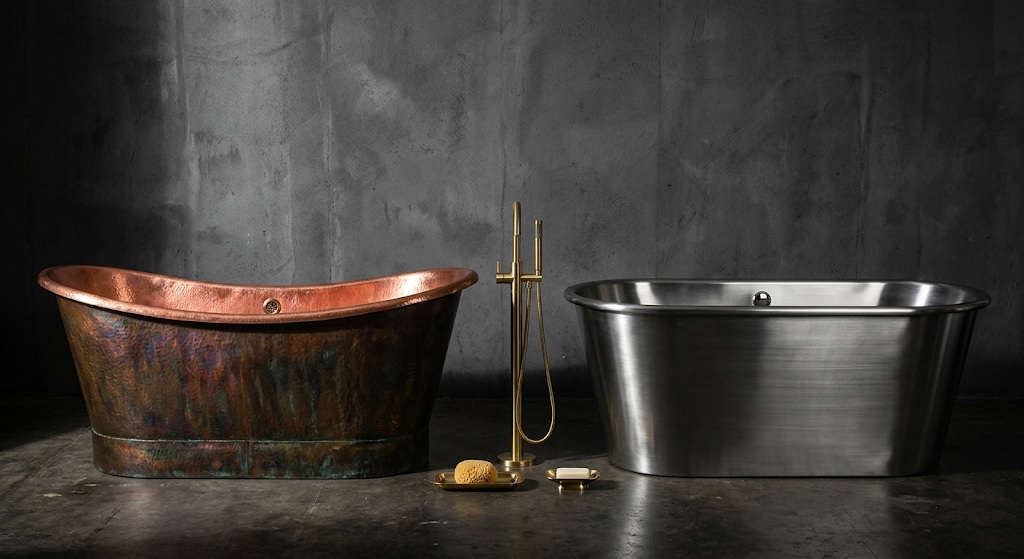
Metal freestanding tubs occupy a specialized niche, appealing to homeowners who want a distinctive material statement rather than a traditional white basin.
Copper tubs are handcrafted from heavy-gauge copper sheet, often hand-hammered for a textured surface that catches light beautifully. Copper possesses natural antimicrobial properties and develops a living patina over time—shifting from bright penny-red toward deep bronze depending on water chemistry and air exposure. Homeowners who appreciate an evolving, organic aesthetic embrace this patina process. Copper heats up quickly when filled, which feels luxurious, but also loses heat faster than cast iron once the water cools.
Stainless steel freestanding tubs offer a sleek, industrial-modern aesthetic with exceptional durability. Marine-grade 316 stainless steel resists corrosion even in coastal environments with salt-laden air. The non-porous surface requires no sealants and cleans easily. Stainless steel tubs are lighter than cast iron—typically 120 to 180 pounds—making them a practical middle-ground option. The main drawback is visible water spotting; hard water leaves mineral deposits that show prominently on the reflective surface, requiring regular wiping after each use.
Sizing and Comfort Considerations
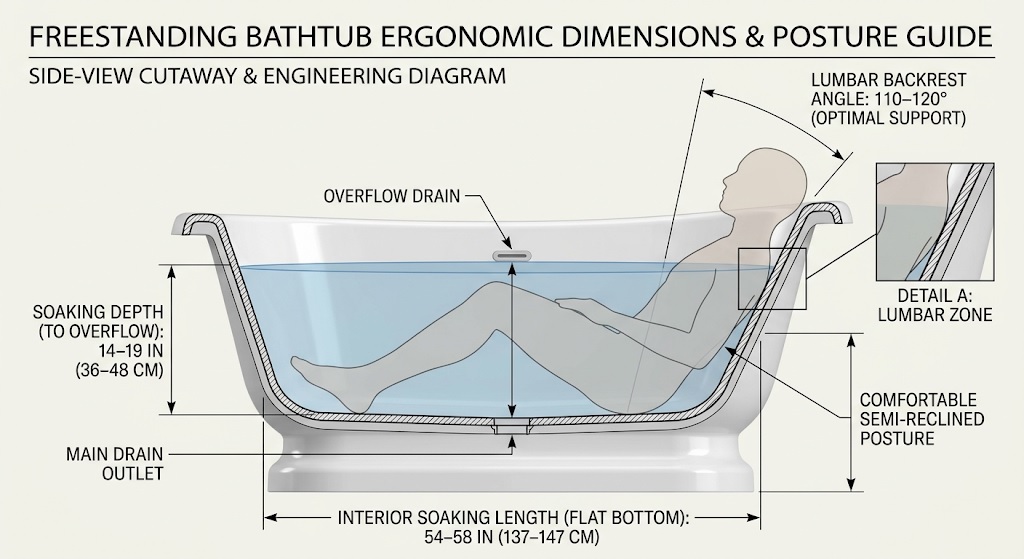
Selecting the right freestanding tub involves more than choosing a material. Dimensions and internal ergonomics determine whether the tub feels like a sanctuary or a cramped basin.
The standard interior soaking depth for a comfortable freestanding tub ranges from 14 to 19 inches. Deeper tubs—17 inches or more—fully submerge the torso and shoulders of most adults, delivering a true deep soak. However, deeper tubs require more water volume, which impacts your hot water heater capacity. A 50-gallon tub may strain a standard 40-gallon water heater, leaving the last few inches lukewarm.
Internal length matters as much as depth. A tub with an interior soaking length of 54 inches comfortably accommodates bathers up to about 6 feet tall. Taller users should seek at least 58 inches to avoid knees protruding above the waterline. Pay attention to internal contour—models with a molded lumbar backrest angled between 110 and 120 degrees provide far better spinal support during extended soaks than flat-bottomed designs.
Drain and Faucet Placement Planning
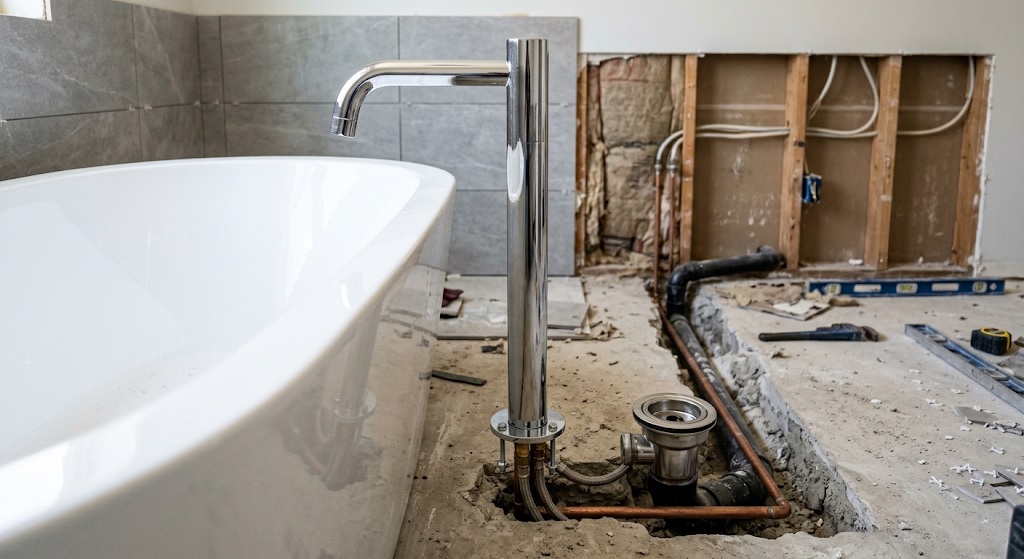
Freestanding tubs require dedicated floor-mounted filler fixtures, since the tub sits away from walls and cannot use standard wall-mounted faucets. Your plumber must run supply lines through the floor before finished flooring is installed. The drain connection also routes through the floor, requiring precise alignment between the tub’s drain location and the rough plumbing below.
Plan the filler spout reach carefully. The spout must extend far enough over the rim to clear the edge without splashing outside, but not so far that it interferes with entry and exit. A reach of 6 to 8 inches past the rim works for most configurations. Confirm the filler’s flow rate—a minimum of 5 to 7 gallons per minute ensures the tub fills in a reasonable 10 to 15 minute window.
Long-Term Maintenance and Care
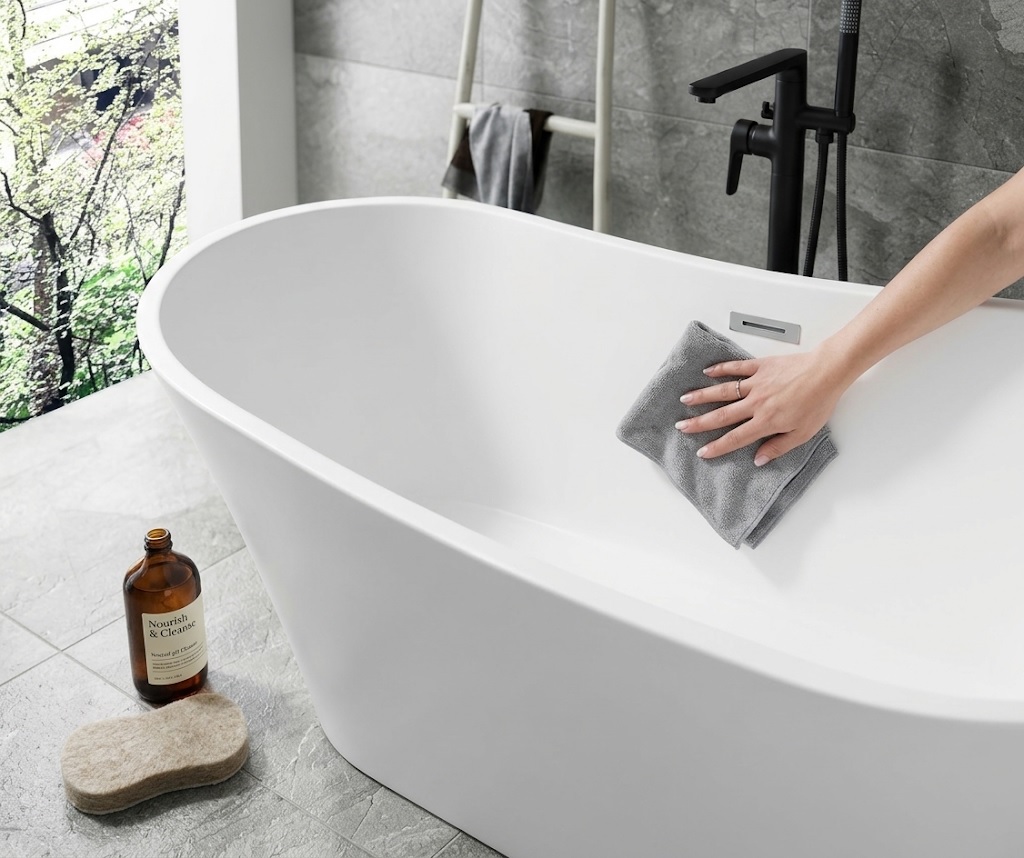
Regardless of material, consistent care extends the tub’s lifespan and preserves its appearance. Rinse the interior with warm water after each soak to remove residual soap film and body oils. Wipe dry with a soft microfiber cloth to prevent hard water spotting and mineral ring formation at the waterline.
Avoid abrasive powder cleaners, scouring pads, and acidic descaling products on all freestanding tub materials. Neutral pH liquid cleaners paired with soft cloths handle routine cleaning without degrading the surface finish. For solid surface and acrylic tubs, an occasional application of automotive-grade acrylic polish restores surface luster and fills microscopic scratches.
Inspect the silicone seal around the floor drain annually. Freestanding tubs shift slightly with thermal expansion and repeated filling, and a degraded drain seal allows water to seep beneath the tub base, potentially damaging the subfloor. Replacing a worn seal takes minutes and prevents costly water damage.
Making Your Final Selection
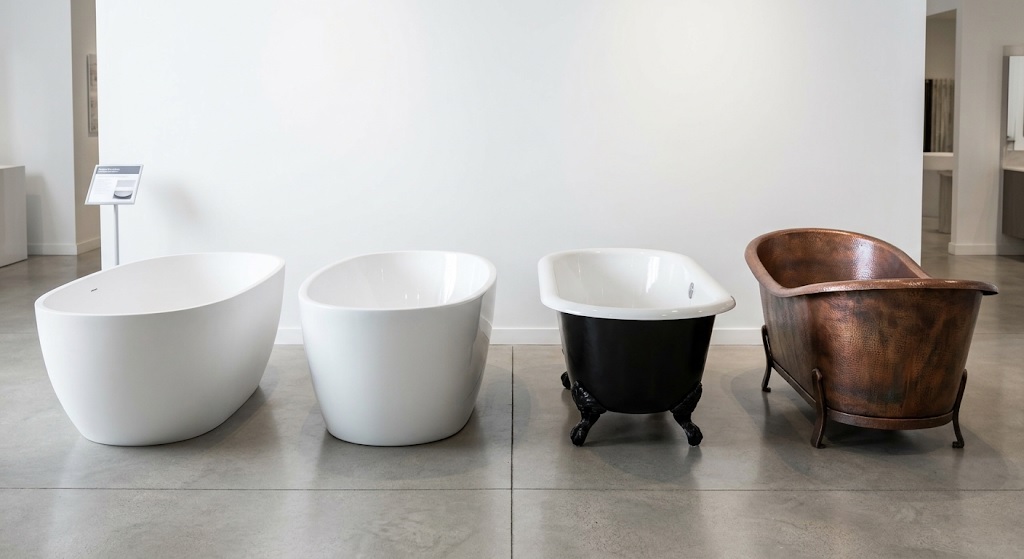
The best freestanding bathtub for your home balances material performance, dimensional comfort, and installation logistics against your renovation budget. Solid surface models offer the best overall value for premium aesthetics with on-site repairability. Acrylic tubs deliver sculptural shapes at accessible prices. Cast iron remains the gold standard for heat retention and enamel durability where floor structure can support the weight. Copper and stainless steel cater to specific design visions that prioritize material character.
Measure your space twice, confirm your floor can support the chosen material, verify your water heater capacity, and always work with a licensed plumber for drain and supply rough-in. A freestanding bathtub is a long-term investment in daily comfort—choosing carefully ensures it remains the centerpiece of your bathroom for years of reliable, enjoyable use.